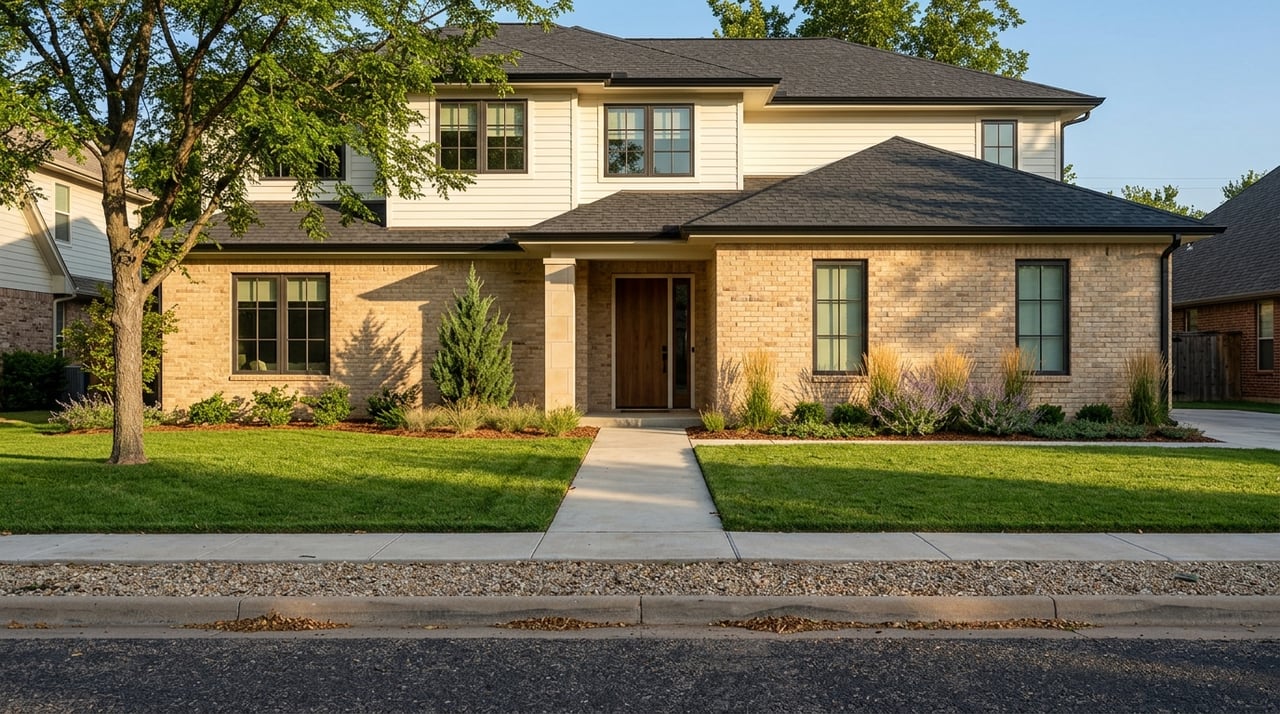
Denver vs South Suburbs Housing: How to Choose
Abby Barratt July 2, 2026
Abby Barratt July 2, 2026
If you are torn between Denver and the south suburbs, you are not alone. On paper, these areas can look surprisingly close in price, which makes the decision feel less about budget and more about how you want to live day to day. The good news is that once you compare housing style, commute patterns, and lifestyle tradeoffs, the choice usually gets much clearer. Let’s dive in.
A lot of buyers assume moving south automatically means a much lower price point. In the current May 2026 snapshot, that is not really the story. Denver, Littleton, Parker, and Highlands Ranch all sit in a fairly similar broad price band, even though the living experience can feel very different.
That means your decision is often less about finding the cheapest option and more about understanding what each dollar buys you. In some places, that may mean a more central location and a wider mix of housing types. In others, it may mean more square footage, more trail access, or a more suburban routine.
Here is the current snapshot for median sale price and market pace:
Area | Median Sale Price | Year-Over-Year Change | Market Pace |
|---|---|---|---|
Denver | $634,620 | Up 2.5% | 18 days |
Littleton | $629,123 | Down 0.93% | 18 days |
Highlands Ranch | $707,077 | Down 2.1% | 12 days |
Parker | $659,106 | Down 3.4% | 99.4% sale-to-list ratio |
Denver and Littleton are nearly tied on median sale price. Highlands Ranch is currently the highest of the four, while Parker sits between Denver and Highlands Ranch in this snapshot.
Price per square foot also helps tell the story. Denver is at $368 per square foot, compared with $297 in Littleton and $277 in Highlands Ranch. That suggests Denver buyers are often paying more for centrality and a more compact housing pattern, while south suburban buyers may get a different mix of home size and lot size for a similar overall price.
Denver is the most urban option in this comparison. It offers a broader housing mix that includes single-family homes, townhomes, and condos or co-ops. If you want more choices in housing form and a more in-town feel, Denver stands apart.
It also has the strongest mobility profile of the group. Redfin reports a 61 Walk Score, 45 Transit Score, and 72 Bike Score. If being able to get around with less reliance on a car matters to you, Denver is the clearest fit.
Choosing Denver can make sense if your priorities include:
Denver also brings strong outdoor access despite being the most urban choice. Denver Parks and Recreation says the city includes 30 recreation centers and nearly 20,000 acres of urban and mountain parkland, including off-street trails, parkways, and natural areas.
The biggest tradeoff in Denver is often space relative to price. With the highest price per square foot in this comparison, buyers may need to compromise on lot size, home size, or both compared with some south suburban options.
Littleton is often the most balanced choice for buyers comparing Denver with the south suburbs. It blends suburban space with some of the convenience and character that buyers often worry they will lose by leaving the city.
The city describes itself as a 13-square-mile community with more than 44,000 residents, more than 59 parks and open spaces, over 1,400 acres of parks and open space, and more than 200 miles of trails. It also highlights a historic downtown and two light rail stations with easy access to Downtown Denver.
Littleton can be a strong fit if you want:
For many buyers, Littleton feels like a practical middle path. You are not as urban as Denver, but you are also not giving up as much connectivity as you might in a more car-dependent suburb.
Littleton may not offer the same level of central convenience as Denver or the same master-planned consistency as Highlands Ranch. Its appeal is balance, which can be exactly what many buyers want.
Highlands Ranch is the clearest master-planned suburban option in this group. If you are looking for neighborhood consistency, larger-home suburban living, and easy access to open space, it often rises quickly to the top of the list.
The Highlands Ranch Metro District manages 2,644 acres of open space and more than 70 miles of trails. More than 4,700 homes back to open space areas, which helps explain why trail access is such a defining part of daily life here.
Highlands Ranch may be the right fit if you value:
This area is also the highest-priced market in this four-area snapshot, with a median sale price of $707,077. Homes are moving quickly too, with a median of 12 days on market.
Even with commuter options like RTD Park-n-Ride service at Highlands Ranch Town Center, Highlands Ranch still tends to feel more car-dependent than Littleton or central Denver. If your routine depends on frequent transit use or a more walkable setup, that matters.
Parker tends to appeal to buyers who want newer suburban housing, more space, and a lifestyle that is comfortable with driving. The market examples in the current snapshot show how wide the range can be, from a like-new 4-bedroom, 4-bath home at 2,398 square feet to recently sold homes as large as 6,490 square feet.
That variation is useful to know because Parker can offer very different outcomes depending on lot, size, and finish. It is not just one type of suburb, but it does trend toward larger detached homes.
Parker can make sense if your priorities include:
Parker also emphasizes parks, trails, and an active community. At the same time, the town’s own Bike and Pedestrian Master Plan describes Parker as an auto-centric bedroom community where a vehicle is needed for almost all errands and trips.
If you want to drive less, Parker may feel limiting. It tends to work best for buyers who are comfortable with a more vehicle-dependent routine in exchange for space and newer housing patterns.
Denver is usually the right call if your top priority is centrality. If you want stronger transit and bike access, a broader urban housing mix, and the easiest day-to-day life without relying heavily on a car, Denver leads the pack.
Littleton is the strongest middle ground. It offers suburban living, rail access, trail connectivity, and a historic downtown feel that can make the move from city living feel more natural.
Highlands Ranch is a strong match if you want a master-planned setting and a routine that revolves around neighborhoods, open space, and trails. If larger-home suburban living is part of the goal, this is one of the clearest options.
Parker often works best if you are focused on space, newer homes, and a more traditional suburban setup. The tradeoff is a more car-oriented daily life, but for many buyers that is worth it.
When prices are this close, the better question is not just, "Where can I afford to buy?" It is, "What kind of daily life do I want my home to support?"
If you want to be more connected to transit, biking, and central-city convenience, Denver may give you the strongest fit. If you want more suburban breathing room, Littleton, Highlands Ranch, and Parker each offer a different version of that lifestyle.
The right answer depends on how you weigh commute style, home size, outdoor access, and neighborhood feel. A smart move is not only about today’s list price. It is about choosing the place that fits your life and your long-term goals.
If you want help sorting through Denver versus the south suburbs, Abby Barratt can help you compare the options with local insight, practical strategy, and a clear eye on long-term value.
August 27, 2026
August 20, 2026
August 13, 2026
August 6, 2026
August 6, 2026
July 23, 2026
July 16, 2026
July 9, 2026
Abby Barratt | July 2, 2026
Abby Barratt thrives on building long-term business relationships by cultivating trust, fostering collaboration, and creating value-driven partnerships. She balances this relationship-focused approach with a tenacious, goal-oriented mindset, consistently driving results while maintaining integrity and reliability.