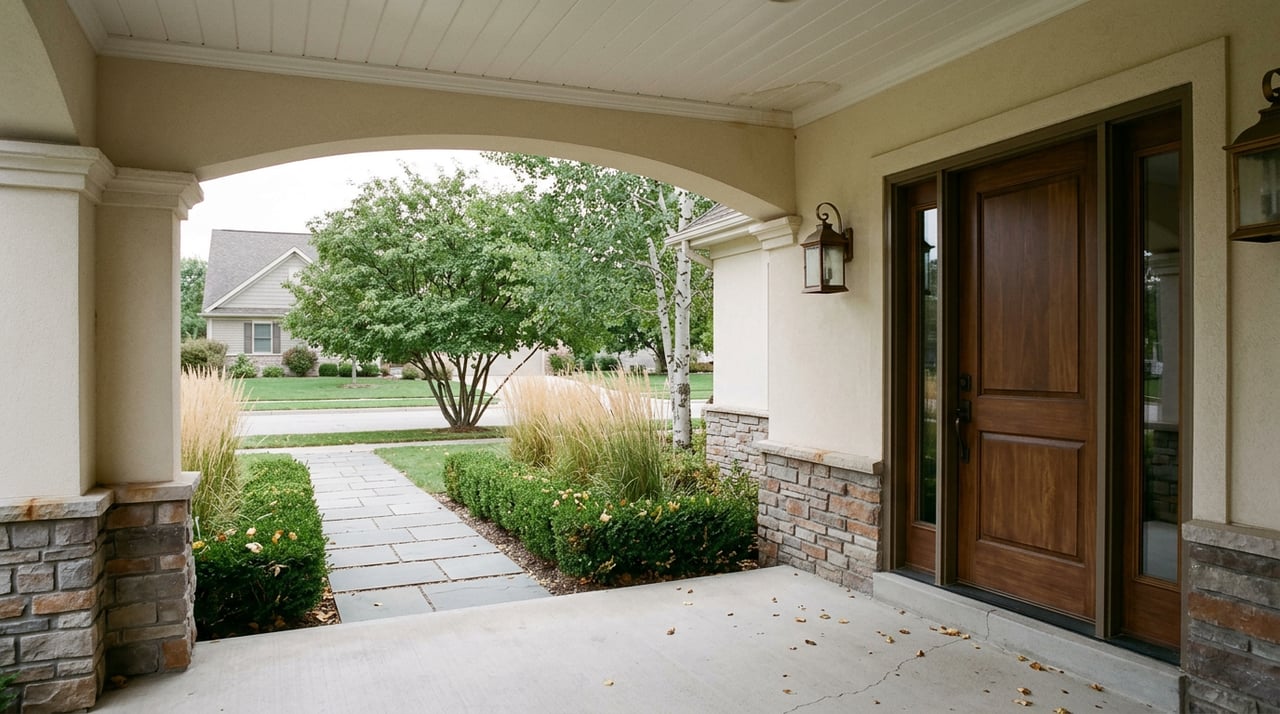
The Metro District Disclosure Rule for Qualifying Lone Tree Resales
September 24, 2026
September 24, 2026
Say you're under contract on a ten-year-old resale in Heritage Hills or a five-year-old townhome near Lincoln Station. No builder involved, no dirt lot, no fresh-poured foundation. Just an ordinary owner-to-owner sale like thousands that close in Lone Tree every year. It's easy to assume the paperwork that comes with new construction, the metro district disclosures, the tax estimates, the district website links, doesn't apply to you. For a resale in a qualifying metro district, that assumption was correct until August 2025. It isn't anymore.
Colorado quietly rewrote the rule in 2025, and the change lands squarely on Lone Tree, a city built almost entirely inside metro district boundaries. The new law doesn't just affect builders selling their first phase of homes. It reaches sellers of residential property in qualifying metro districts, including an owner who bought a qualifying home resale in 2019 and is listing again this fall.
Colorado has required some form of metro district disclosure since 2022, but that original rule was narrow. It applied, as Otten Johnson explains, to "newly constructed residences," meaning the disclosure obligation sat with builders and the very first buyer of a home. Resale sellers, the person selling a home they'd already lived in, were largely outside its reach.
House Bill 25-1219 changed that. Signed by Governor Polis on May 29, 2025 and effective August 6, 2025, the law extends the disclosure requirement to every seller of residential property located inside a metropolitan district organized on or after January 1, 2000, whether or not the home is new construction. That means the disclosure duty now follows the property, not just the builder. A seller flipping a house they bought two years ago in a RidgeGate district has the same obligation as the original developer.
The disclosure itself has teeth. A seller must provide the buyer with the district's official website, as the Colorado Division of Real Estate explains.
Metro districts aren't unusual in the Denver area. What makes Lone Tree different is how many operate inside one city, and how differently they're governed. According to the city's own metro districts page, Lone Tree has direct approval authority over two Rampart Range metro districts and the Yard Metro District, while Lincoln Station, Heritage Hills, OmniPark, and Park Meadows metro districts fall under Douglas County's authority even though they sit fully or partially inside city limits.
That split matters for a buyer trying to understand who actually oversees the district collecting their tax dollars. A home two streets apart can answer to different boards with different budgets and different mill levy histories, and the city itself is careful to note it doesn't collect or spend metro district tax revenue. That job belongs entirely to the districts.
Here's the detail that makes the new law more than a paperwork formality. Rampart Range Metropolitan District No. 9, one of the two Rampart Range districts under the city's own authority, sat dormant with a $0.00 mill levy before its reactivation. A Douglas County public notice filed in December 2025 confirms the district returned to active status on October 23, 2025.
Nothing about the homes inside that district changed. No new construction, no rezoning, no visible event a homeowner would have noticed from the street. The district simply switched from inactive to active. Under the old rule, a resale seller in that district could have reasonably assumed the metro district conversation didn't apply to them, since the district wasn't collecting anything. Under the new rule, that assumption doesn't hold. Current status can change without warning between the day a seller lists and the day they close.
That's the real lesson for anyone buying or selling resale property in Lone Tree right now. A quiet district isn't a permanently quiet district.
Part of what's driving so many of these transactions through Lone Tree's metro district structure is simply how much is under construction. Axios reported in May 2026 that RidgeGate, after roughly 25 years of planning, is finally seeing major build-out accelerate east of I-25. Active projects include a 123,000-square-foot King Soopers Marketplace, the city's new Justice Center, High Note Regional Park with sports fields and event space, and an elementary school slated to open for the 2027-28 school year. The Lyric neighborhood is expanding, the Onyx apartment complex on RidgeGate Parkway is nearing completion, and city planning documents put RidgeGate's eventual population at roughly 30,000 residents alongside 50,000 jobs, anchored by employers like Charles Schwab, Cochlear, Kiewit, and HCA HealthONE Sky Ridge already on the west side.
Even the Denver Broncos looked at the site during their stadium search before choosing to stay in Denver, which says something about how much attention the corridor has drawn. All of that construction sits inside districts that were formed to finance exactly this kind of infrastructure, and sales of residential property in qualifying districts, resale included, require the seller to provide the disclosure to the buyer.
For sellers, the practical shift is simple to describe and easy to miss. If your Lone Tree home sits inside a metro district formed after January 1, 2000, you now owe your buyer the district's website, regardless of how long you've owned the home or whether you bought it new.
For buyers, the shift is a reason to ask a direct question early: is this property inside a metro district, and if so, which one, and what is its current mill levy status? A district that's been quiet for years, like Rampart Range No. 9 before its reactivation, can change status without any change to the home itself. Confirming the district's status independently through the county's records is worth the extra step, especially on a home that's changed hands more than once since the district was formed.
Does this apply to me if I've owned my home for years and I'm not building anything new? Yes. As of August 6, 2025, the disclosure requirement applies to any residential seller inside a qualifying metro district, not just builders selling new construction.
How do I find out if my Lone Tree home is inside a metro district? The city of Lone Tree's metro districts page lists which districts fall under city authority and which fall under Douglas County. Douglas County's open data portal and your property tax statement will also show every taxing entity attached to your parcel.
Lone Tree's growth isn't slowing down, and neither is the paperwork that comes with living inside a city built district by district. If you're weighing a resale purchase or getting ready to list in RidgeGate, Lincoln Station, or anywhere else in Lone Tree's patchwork of metro districts, it helps to have someone who already knows which boards oversee which streets. Abby Barratt works this market closely and can walk you through exactly what your specific address owes a buyer, or what to ask before you write an offer. Let's connect.
This article is general information, not legal, tax or financial advice. Consult a qualified professional about your situation.
October 22, 2026
October 15, 2026
October 8, 2026
October 1, 2026
September 24, 2026

September 17, 2026

September 10, 2026

September 3, 2026

August 27, 2026
Abby Barratt thrives on building long-term business relationships by cultivating trust, fostering collaboration, and creating value-driven partnerships. She balances this relationship-focused approach with a tenacious, goal-oriented mindset, consistently driving results while maintaining integrity and reliability.